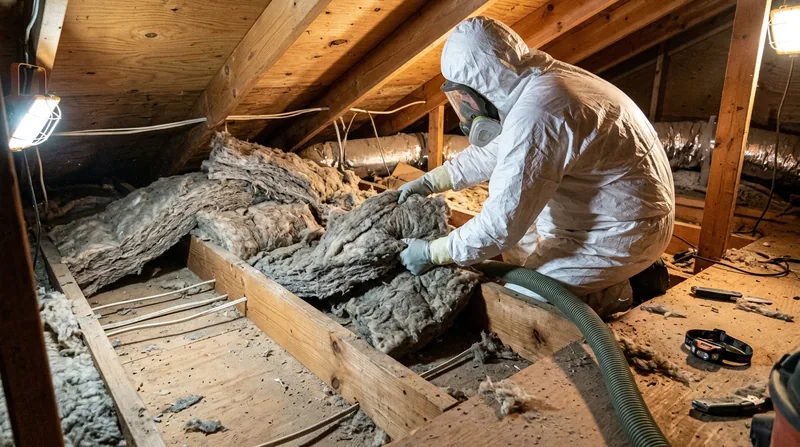




Insulation Removal in Asheville is often the unglamorous first step of a retrofit that actually works. Buncombe County attics and crawl spaces across Montford, Kenilworth and West Asheville are full of sagging batts, moisture-logged fiberglass and decades of settled debris that trap heat in summer and let cold pour through in winter. Before we spray new foam, we remove what failed. Old insulation does not magically improve when you cover it. Wet, compressed or contaminated material must come out, or the new work sits on a foundation that will fail again. We handle attic removal, wall cavity cleanout and crawl space extraction across Greater Asheville so the substrate is clean, dry and ready for proper installation.
Why Insulation Removal Matters in Asheville's Mixed-Humid Climate
Asheville sits in IECC climate zone 4A, where humid summers push moisture inward and cold winters reverse that drive. The seasonal shift in vapor direction is relentless on old insulation. Batts installed in the 1970s and 1980s in ranch homes across Buncombe County have been cycling moisture for forty years. They sag under their own weight, compress into the joists, and lose R-value. On sloped mountain lots near Weaverville and Black Mountain, crawl spaces stay damp year-round, and fiberglass absorbs that moisture like a sponge. When you add new foam over failed material, you trap the problem underneath and guarantee mold, rot and continued energy loss. Removal is not optional; it is the only honest start.
- We extract old batts, blown-in fiberglass and settled debris from attics before any new foam goes in.
- We remove compressed or moisture-damaged insulation from wall cavities in pre-1980 homes across Montford and Kenilworth.
- We clean crawl spaces and rim joists of degraded material so the substrate is dry and ready for spray foam air sealing.
- We haul and dispose of all removed insulation according to local waste regulations and environmental guidelines.
Proper removal protects the framing and ensures the new insulation performs as designed.
Key info: In West Asheville and Fairview, older homes over damp crawl spaces often have fiberglass batts that have absorbed groundwater seepage for decades. Removal exposes the actual moisture source and allows us to address it before new foam is installed. See more on crawl space spray foam insulation to understand the full retrofit strategy.
For more on regulations and permitting for insulation work in Asheville, refer to the City of Asheville Building Safety Department. Local codes govern ventilation, thermal barriers and ignition barriers; our estimates reference what applies at your address.
How We Remove Old Insulation in Asheville: A Step-by-Step Process
Removal is methodical and dusty. We contain the work area, extract material carefully to avoid contaminating the rest of the home, and haul everything off site. The goal is a clean substrate, dry framing, clear joists, no debris. Once removal is complete, we inspect for moisture, mold, pest damage and structural issues. If the crawl space or attic has an active moisture problem, we address that before foam is sprayed. If the roof is leaking or the rim joist is wet, we do not spray over it. We fix the moisture first or we walk away.
- We inspect the attic or crawl space to identify all insulation, debris and any moisture or damage.
- We set up containment and ventilation to manage dust and airborne particles during extraction.
- We remove batts, blown-in material and any settled debris by hand or with powered extraction equipment.
- We inspect the bare framing, joists and rim board for moisture, pest damage or rot.
- We address any active leaks, seepage or condensation issues before scheduling foam installation.
- We haul all material off site and dispose of it according to local regulations.
A clean removal is the foundation of a successful retrofit. Learn more about insulation replacement and re-insulation to see what comes next.
Local example: A home in Fletcher with a mid-century attic had 6 inches of settled fiberglass, mouse droppings, and a roof leak that had soaked the insulation for two seasons. We removed everything, identified and repaired the leak source, let the framing dry, and then installed closed-cell spray foam to seal the attic and stop air leakage. The homeowner's energy bills dropped and the attic stayed dry.
Insulation Removal Methods: Which Approach Fits Your Home
| Method | How It Works | Best For |
|---|---|---|
| Manual Extraction | Batts and rolls removed by hand into bags, sorted and hauled off site. | Attics with accessible batts, wall cavities, and small to medium spaces in Asheville and Biltmore Forest. |
| Powered Extraction | Vacuum-powered equipment pulls blown-in fiberglass, cellulose or rockwool from attics and walls into a collection tank. | Large attics with blown-in material, heavily settled debris, and jobs in Weaverville, Swannanoa and Black Mountain. |
| Crawl Space Cleanup | Damp or degraded insulation removed by hand, framing inspected for moisture and rot, debris hauled away. | Crawl spaces in Montford, Kenilworth and West Asheville with moisture issues, mold risk or failed vapor barriers. |
| Selective Partial Removal | Damaged or wet sections removed while sound insulation in other zones is left in place and topped up. | Homes in Fairview and Fletcher where only part of the attic or wall needs replacement, not full gut. |
The right method depends on the scope, the type of material, and whether the substrate is dry or compromised. We assess your space on site and recommend the approach that leaves you with a clean foundation for new foam.
Insulation Removal Cost in Asheville: What to Expect
Removal costs in Asheville and surrounding areas start at around $950 for a small attic or crawl space, but the real figure depends on how much material is in the space, how accessible it is, and whether the substrate has moisture or contamination that slows the work. A 1,200-square-foot attic with settled batts and debris may run $1,200 to $1,800. A damp crawl space with degraded fiberglass and standing water takes longer and costs more because we have to work carefully and address the moisture before we leave. Access matters too. A home with a narrow attic hatch in Woodfin or Weaverville takes longer than one with a large scuttle opening. Proximity to structures, buried utilities and neighboring properties does not typically affect insulation removal, but it does affect any new foam work that follows.
The best way to know your actual cost is to get a written estimate with R-value and thickness specifications. We provide estimates free and respond within 24 hours. Call (828) 519-0053 or visit our pricing overview to see ranges for different job sizes and scenarios.
Removal is often bundled with new insulation. If you are planning a full retrofit with spray foam, the removal cost is part of the total project estimate. If you are just cleaning out old material before a different contractor installs their product, we can quote removal alone. Honest guidance: sometimes a simple blow-in top-up of sound insulation is the right answer, and we will say so rather than recommend unnecessary removal.
What to Look for When Hiring an Insulation Removal Contractor Near Asheville
Not all removal work is equal. Some contractors pull out old material and leave the space dirty, damp or contaminated. Others skip the inspection and spray foam over a wet crawl space or moldy framing, which guarantees failure. When you call a spray foam insulation contractor near Asheville, ask these questions: Do they inspect the substrate before removal and after? Do they test for moisture and address it before any new work begins? Can they show you a written estimate that names the scope, the material type and the disposal plan? Are they fully insured, and can they provide proof of coverage? Do they pull permits if your city requires them for this work? Do they give you a clear timeline and a re-entry window if foam will be sprayed after removal?
- Ask for a written estimate that specifies what will be removed, how it will be disposed of, and whether any moisture remediation is included.
- Request references from recent removal jobs in Asheville, Weaverville or Fairview so you can hear from other homeowners.
- Confirm that the contractor is fully insured and ask for proof of coverage before work begins.
- Verify that any new foam installation will include mechanical ventilation during cure and a stated re-entry window of 24 to 48 hours.
- Check whether your HOA or local building department has rules about insulation work, especially if you live in a master-planned community near Biltmore Forest.
The contractor you hire should be local, reachable, and willing to stand behind the work. If something goes wrong after removal, you need to know who to call. Contact us here for a free estimate and to discuss your specific situation.
Insulation Removal in Asheville: Pricing Guide
| Service | Price | Details |
|---|---|---|
| Small attic or crawl space removal | Starting at $950 | Up to 800 sq ft, manual extraction, includes debris haul-off and inspection of framing |
| Medium attic with blown-in or settled material | Starting at $1,400 | 800 to 1,500 sq ft, powered extraction equipment, moisture assessment, disposal and site cleanup |
| Large attic or multi-zone crawl space removal | Starting at $1,800 | 1,500+ sq ft, complex access, damp substrate, moisture remediation planning before new foam |
| Damp crawl space with moisture issues | On estimate | Requires on-site inspection to assess standing water, mold risk and remediation scope before removal cost is set |
| Travel and setup | Included | in Asheville, Biltmore Forest, Weaverville, Fairview and surrounding service areas, no mileage fee |
| Free estimate | No obligation | Response within 24 hours at (828) 519-0053, written quote with scope and pricing breakdown |
Indicative pricing, the exact cost depends on square footage, finish, and site access. Free personalized estimate within 24h at (828) 519-0053.


