Understanding the Asheville Climate Challenge
Living in Asheville means dealing with temperature swings that can test your home's insulation year-round. Winters bring cold mountain air, while summers can be surprisingly warm. This climate reality makes choosing the right insulation strategy more than just a comfort issue; it directly impacts your heating and cooling costs, your home's durability, and your long-term energy efficiency.
Many homeowners face a critical decision when they discover inadequate attic insulation: should they invest in simple air sealing, or should they step up to a comprehensive spray foam solution? The answer isn't one-size-fits-all, but understanding your options will help you make an informed choice that aligns with your budget, your home's condition, and your comfort goals. This honest comparison will walk you through what each approach offers and help you determine which path makes sense for your Asheville home.
What Is Air Sealing and When Does It Work?
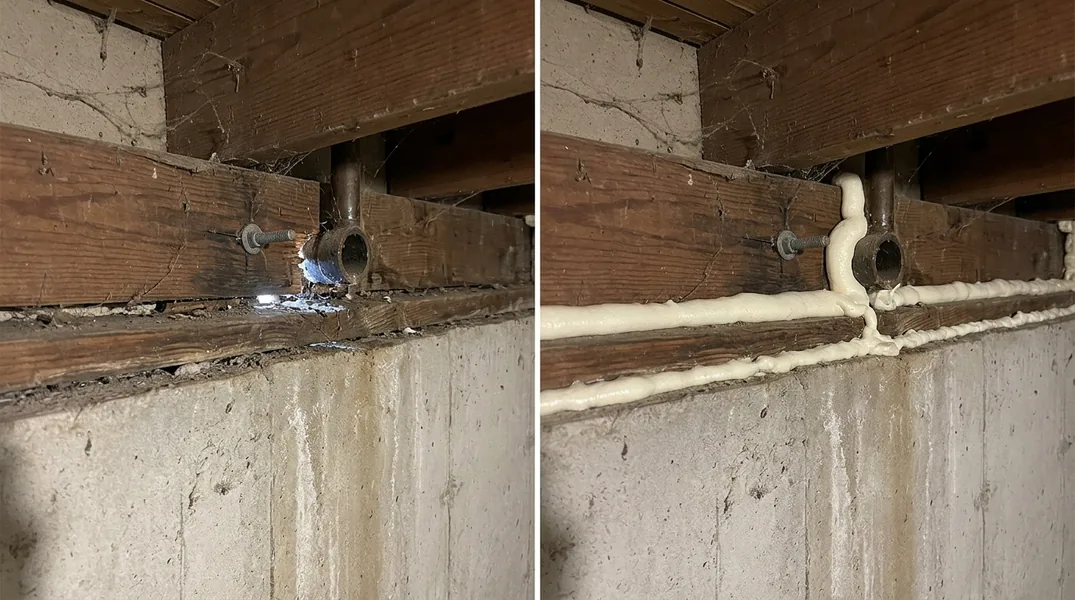
Air sealing is the process of identifying and closing air leaks throughout your home, particularly in the attic, basement, and around windows and doors. Using caulk, weatherstripping, foam sealant, and sometimes spray foam in targeted areas, air sealing addresses the movement of conditioned air from your living spaces into unconditioned zones. For many homes, air leakage accounts for a significant portion of energy loss, sometimes as much as 25 to 30 percent of your heating and cooling costs.
Air sealing works best when your attic already has a reasonable baseline of insulation in place. If your attic insulation meets or exceeds the recommended R-value requirements for your region, then sealing those air leaks can deliver meaningful energy savings without a major investment. It's also an excellent option for homeowners working with a limited budget or those who want to address the most critical problem areas first. However, air sealing alone won't increase your insulation's thermal resistance; it simply prevents warm or cool air from escaping through gaps and cracks.
Spray Foam Insulation R Value Per Inch: Why Density Matters
One of the most important metrics when comparing insulation options is R-value per inch, which tells you how much thermal resistance you get for each inch of material. This is where spray foam insulation truly distinguishes itself. Closed Cell Spray Foam Insulation typically delivers an R-value of 6.0 to 7.0 per inch, while Open Cell Spray Foam Insulation provides approximately 3.5 to 3.6 per inch. Compare this to traditional fiberglass batts, which average 3.2 to 3.8 per inch, and you'll see why spray foam packs such impressive performance into a thin layer.
The high R-value per inch means you need less material to achieve the same thermal resistance. This becomes especially valuable in attics where space is limited or where you want to maximize insulation without excessive thickness. Closed cell foam also provides a vapor barrier, which protects against moisture intrusion, a critical concern in mountain climates like Asheville where humidity and temperature fluctuations can lead to condensation problems. Open cell foam, while slightly lower in R-value, is more affordable and still offers excellent air sealing properties along with sound dampening benefits.
R Value Requirements by State: What Does North Carolina Expect?
North Carolina's building codes specify minimum insulation requirements based on climate zones. For most of the state, including the Asheville area, the current code requires an R-38 to R-49 minimum for attic insulation, depending on the specific zone and whether you're building new or retrofitting existing homes. These requirements exist to ensure homes meet baseline energy efficiency standards and maintain consistent performance across the state.
Meeting these R-value requirements by state standards is non-negotiable if you're planning to sell your home, refinance your mortgage, or want to ensure your home qualifies for energy efficiency programs and incentives. With spray foam's superior R-value per inch, achieving R-38 to R-49 requires significantly less material than traditional batts. For example, closed cell foam at R-6 per inch would need approximately 6 to 8 inches to meet minimum requirements, whereas fiberglass might require 12 to 16 inches. This efficiency makes spray foam an attractive option for older homes with limited attic height or complex roof structures.
Rebates: Making the Investment Affordable
The federal insulation tax credit ended on December 31, 2025, so ask your utility company about any current rebates instead.
These rebates vary by year and program, so it's worth contacting your local utility or checking with your state's energy office for current offerings. Some programs specifically incentivize spray foam insulation because of its superior performance and air sealing properties. When you factor in these incentives alongside the long-term energy savings, the effective cost of upgrading to spray foam becomes much more competitive with basic air sealing alone. To explore what credits and rebates you might qualify for, we recommend getting a free estimate from a local professional who can advise on current incentive programs.
How Thick Should Spray Foam Be? Finding the Right Thickness for Your Home
The question of how thick spray foam should be depends on several factors: your climate zone, your current insulation levels, your energy goals, and your budget. The minimum thickness to meet North Carolina's building code for attic insulation ranges from 6 to 8 inches for closed cell foam, depending on your specific R-value target. However, many homeowners in mountain communities like Weaverville and surrounding areas opt for thicker applications, sometimes 8 to 10 inches, to achieve superior performance and greater energy savings.
Thicker spray foam provides better thermal resistance, improved air sealing, and enhanced protection against temperature extremes. It also creates a more durable moisture barrier, which is particularly important in regions prone to seasonal humidity swings. However, thicker applications cost more, so you'll need to weigh the additional expense against your expected energy savings and comfort improvements. A qualified insulation contractor can perform a thermal audit of your home and recommend an optimal thickness based on your attic's current condition, your roof structure, and your specific needs. Contact Asheville Spray Foam Insulation at (828) 519-0053 to discuss the right thickness for your project.
Attic Spray Foam Insulation Cost in Asheville: What to Budget
When evaluating the cost of upgrading your attic insulation, it's important to understand what you're comparing. Air sealing alone typically costs less upfront, often ranging from $500 to $2,000 depending on the scope of work and the number of air leaks your home has. However, air sealing doesn't increase your insulation's R-value, so if your attic is already under-insulated, you'll still have an energy efficiency problem.
Attic Spray Foam Insulation represents a larger investment, typically ranging from $2,500 to $8,000 or more for a complete attic application, depending on your attic size, the type of foam you choose, and the desired thickness. Many homeowners see their investment returned through reduced heating and cooling costs within 5 to 10 years, after which they enjoy years of additional savings. For an accurate assessment of pricing tailored to your specific home and goals, request a free estimate today.
Making Your Decision: Air Sealing, Spray Foam, or Both?
The honest truth is that the best choice depends on your home's current condition, your budget, and your long-term comfort and energy goals. If your attic insulation already meets code requirements and you primarily have air leakage issues, air sealing alone might be the smart, cost-effective solution. However, if your insulation is below recommended levels, if you live in an older home with poor attic conditions, or if you want maximum energy efficiency and comfort, spray foam insulation offers superior performance that air sealing alone cannot match.
Many homeowners find that a combination approach makes sense: start with air sealing to address the most obvious leaks, then add spray foam insulation to boost R-values and create a complete thermal barrier. This staged approach can help you manage costs while still achieving meaningful improvements. Whatever path you choose, working with a knowledgeable local contractor who understands Asheville's climate and building conditions is essential. Asheville Spray Foam Insulation has the expertise to evaluate your specific situation and recommend the solution that delivers the best value for your investment. Call (828) 519-0053 or visit our website to schedule your free estimate and take the first step toward a more comfortable, energy-efficient home.
Looking for a professional spray foam insulation contractor in Asheville? Asheville Spray Foam Insulation responds fast for all your spray foam insulation needs.
Get a Free Quote