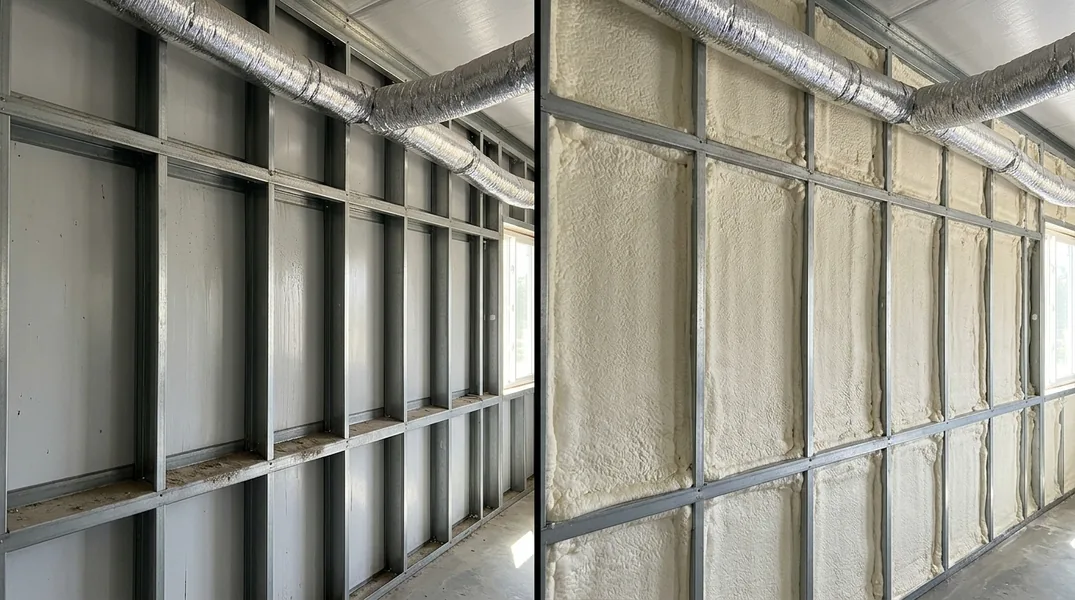
Why Building Permits Matter Before Spray Foam Installation
Many homeowners in Asheville are eager to upgrade their attics with spray foam insulation to improve energy efficiency and comfort. However, before you pick up the phone to schedule an installation, there's a crucial step that shouldn't be skipped: checking with your local building department about permits and code requirements.
Building permits exist for good reason. They ensure that work performed on your home meets current safety and energy codes, protects your property value, and gives you recourse if something goes wrong. Many homeowners assume that insulation work doesn't require a permit, but in Asheville and Buncombe County, attic improvements often do. The specific requirements depend on the scope of your project and whether you're making other structural or electrical changes at the same time.
Skipping the permit process might seem like a quick way to save money, but it can create headaches later. If you ever need to file an insurance claim, sell your home, or refinance your mortgage, undocumented work can complicate things significantly. A reputable contractor like Asheville Spray Foam Insulation will work with you to navigate these requirements and ensure everything is done above board.
Understanding Asheville's Building Code Requirements for Spray Foam
The International Building Code (IBC), which Buncombe County largely follows, sets minimum standards for insulation and ventilation in residential attics. When you install Attic Spray Foam Insulation, you're not just adding a layer of material; you're modifying the thermal and moisture dynamics of your attic space. This is why building officials take it seriously.
One key consideration is the R-value requirement for your climate zone. Asheville sits in a region where attic insulation typically needs to meet an R-value of R-38 to R-49, depending on your specific heating and cooling needs. Both Closed Cell Spray Foam Insulation and Open Cell Spray Foam Insulation can achieve these targets, but they do so in different ways. Closed cell spray foam has a higher closed cell spray foam r value, typically between R-6 and R-7 per inch, while open cell spray foam delivers approximately R-3.5 per inch. Your building department may have preferences or requirements about which type is appropriate for your situation.
Additionally, building codes require proper ventilation in attics with certain roof configurations. If your attic has soffit and ridge vents, installing spray foam can interfere with that airflow. Your contractor and the building department will need to discuss how to maintain adequate ventilation or whether a sealed attic approach is acceptable for your home.
Open Cell vs Closed Cell Spray Foam: Code Considerations
The choice between open cell spray foam and closed cell spray foam isn't just about performance and pricing. Building codes sometimes have specific requirements about which product is suitable for certain applications, particularly regarding moisture management and fire ratings.
Open cell spray foam is more breathable and allows moisture to pass through, which can be an advantage in some climates but a concern in others. Closed cell foam provides a vapor barrier and has superior moisture resistance, making it ideal for areas prone to humidity or where moisture intrusion is a concern. In Asheville's humid subtropical climate, your building department may have specific guidance on which foam type is preferable for attic applications.
Fire ratings are another code consideration. Spray foam products must meet specific fire-safety standards, and building codes typically require a thermal barrier (like drywall) between the foam and the interior living space in certain applications. Your local building department can clarify whether your attic project requires this additional protection and what materials qualify.
How to Approach Your Building Department Before Installation
The process of checking with your building department doesn't have to be intimidating. Start by contacting the Buncombe County Building and Code Enforcement office directly. You can describe your project (attic insulation with spray foam) and ask what permits or inspections are required. They'll provide you with specific guidance based on your address and the scope of work.
Bring your home's address, the square footage of the attic space you want to insulate, and details about your current insulation (if any). Be prepared to discuss whether you're planning to use open cell spray foam insulation or closed cell, as this can affect code compliance. If you're working with Asheville Spray Foam Insulation, ask how they handle permits, and confirm the rules with the building department.
Don't be surprised if the building department asks for a site plan or detailed specifications. This is standard procedure and helps them verify that your project meets code. Once you have permit approval, your contractor will schedule the work and coordinate any required inspections. Most jurisdictions require a final inspection after spray foam installation to confirm the work meets code specifications.
The Long-Term Benefits of Doing It Right
Taking the time to work with your building department upfront might add a few weeks to your timeline, but it protects your investment and your home's integrity. When your spray foam installation is properly permitted and inspected, you have documentation that the work was completed to code. This matters if you ever need to file an insurance claim related to your attic, apply for energy efficiency rebates, or sell your home.
Additionally, a permitted and inspected installation gives you peace of mind. You know that a qualified inspector has verified the Asheville contractor's work meets current safety and performance standards. If any issues arise down the road, you have recourse because the work is on record with the building department.
Energy efficiency improvements like spray foam insulation can also qualify you for certain rebates, but these incentives often require proof that the work was done to code. By getting a permit, you're positioning yourself to take advantage of these financial benefits.
Next Steps: Getting Your Spray Foam Project Started the Right Way
If you're ready to improve your home's energy efficiency with spray foam insulation, start by calling your local building department to understand the permit requirements. Then, reach out to Asheville Spray Foam Insulation to discuss your project. Our team is experienced in working with local codes and can guide you through the process from start to finish.
Whether you're interested in Attic Spray Foam Insulation, Closed Cell Spray Foam Insulation, or exploring Wall & Injection Foam Insulation, we're here to help. Contact us today at (828) 519-0053 to schedule a free estimate and learn how we can help you achieve your home insulation goals while staying fully compliant with local building codes.
Looking for a professional spray foam insulation contractor in Asheville? Asheville Spray Foam Insulation responds fast for all your spray foam insulation needs.
Get a Free Quote