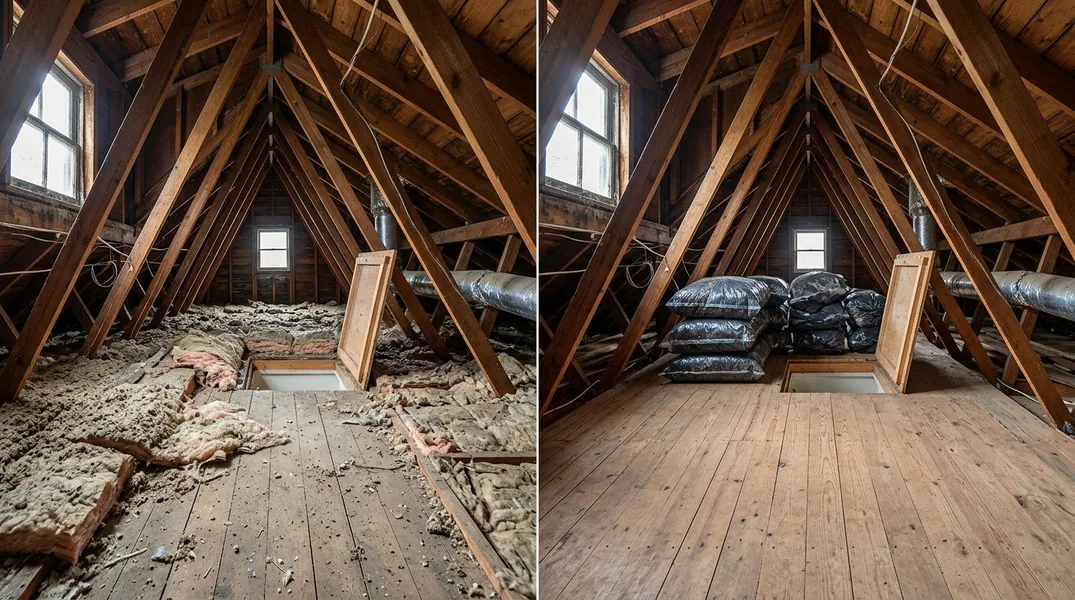
The Challenge of Insulating Historic Homes in Montford and Kenilworth
Montford and Kenilworth stand as two of Asheville's most beloved historic neighborhoods, filled with character-rich homes built decades ago when energy efficiency wasn't a priority. These charming properties, with their original hardwood floors, vintage moldings, and distinctive architectural details, represent a significant investment for homeowners who want to preserve their home's heritage while enjoying modern comfort and lower utility bills.
The dilemma many homeowners face is straightforward: how do you improve insulation and energy performance without compromising the historic integrity that makes these neighborhoods special? Traditional insulation methods often require extensive wall removal, disruption to original plasterwork, and visible changes to the home's interior. For owners of these treasured properties, such invasive approaches feel like a betrayal of the very character they bought the home to preserve. This is where modern spray foam solutions offer a compelling alternative that respects both your home's past and your present-day comfort needs.
Is Spray Foam Insulation Worth It for Older Homes?
When evaluating whether spray foam is a worthwhile investment for your historic home, the answer depends on understanding both the tangible benefits and the realistic expectations. Attic Spray Foam Insulation offers several compelling advantages that make it particularly suited to older properties. First, spray foam creates an airtight seal that traditional fiberglass batts simply cannot match. This air-sealing capability is especially valuable in older homes where gaps, cracks, and poor original construction create significant energy loss. By sealing these air leaks, you can see measurable reductions in heating and cooling costs, often recovering your investment within five to ten years through energy savings alone.
Beyond energy savings, spray foam insulation protects your home's structural integrity. Older homes in Asheville are vulnerable to moisture infiltration, which can lead to mold growth, wood rot, and pest infestations. Spray foam acts as both an insulator and a moisture barrier, reducing these risks significantly. Additionally, the superior R-value per inch means you can achieve better insulation performance without requiring thick layers of material that might be visible or require extensive modifications to wall cavities. For homeowners committed to preserving their property's aesthetic while improving performance, this efficiency is invaluable.
Is Spray Foam Insulation Safe? Addressing Common Concerns
Safety is a legitimate concern when considering any building material for your home, and spray foam insulation deserves careful consideration. The good news is that when properly installed by trained professionals, Closed Cell Spray Foam Insulation and Open Cell Spray Foam Insulation are safe for residential use. Both types are approved by the EPA and meet strict building codes across the United States. The key to safety lies in proper installation, adequate ventilation during application, and ensuring the foam is fully cured before occupants return to the space.
During installation, trained technicians wear protective equipment and follow established protocols to prevent inhalation of fumes. Once cured, spray foam becomes inert and poses no ongoing health risk. The material does not off-gas harmful chemicals into your living space when installed correctly. However, it's crucial to work with experienced, certified professionals who understand proper application techniques and post-installation ventilation requirements. At Asheville Spray Foam Insulation, our team follows industry best practices to ensure your family's safety throughout the entire process. If you have specific health concerns or sensitivities, we encourage you to discuss these during your free estimate consultation.
Understanding Spray Foam Off Gassing and Installation Best Practices
Spray foam off gassing is perhaps the most misunderstood aspect of this insulation type. Off gassing refers to the release of volatile organic compounds (VOCs) that occurs during and immediately after installation. This is a temporary phenomenon, not a permanent condition. The intensity and duration of off gassing depend on several factors: the specific foam formulation, ambient temperature, humidity levels, and application thickness. Properly installed foam typically off gasses for 24 to 48 hours after application, though some residual odor may linger for a few days in well-sealed spaces.
The best way to manage off gassing is through proper ventilation. Professional installers ensure adequate air circulation during and after application, and homeowners should maintain open windows and doors for at least 24 hours following installation. For homes with respiratory sensitivities or families with young children, scheduling installation during a time when you can stay elsewhere temporarily is a reasonable precaution. The off gassing period is temporary and represents a small price for the decades of improved comfort and efficiency that follow. Most homeowners find the brief adjustment period well worth the long-term benefits of superior insulation performance.
Spray Foam Insulation Pros and Cons: A Balanced Perspective
Like any building material, spray foam insulation comes with both significant advantages and some limitations worth understanding. On the positive side, the benefits are substantial: exceptional air sealing that reduces energy loss by 20 to 30 percent in many older homes, superior moisture management, improved comfort through elimination of drafts and cold spots, enhanced structural support, and excellent long-term durability. Spray foam also works in tight spaces and irregular cavities where traditional insulation cannot reach, making it ideal for historic homes with unconventional framing and odd-shaped attics.
The cons deserve honest consideration as well. Spray foam typically costs more upfront than fiberglass batts or cellulose insulation, though the energy savings and durability often justify the investment. Once installed, it cannot be easily removed or modified without professional help. Some people object to the temporary odor during installation. Additionally, while both closed-cell and open-cell foam are safe when properly installed, the application process requires trained professionals, not a DIY project. For homeowners in historic neighborhoods, the biggest potential con is finding contractors experienced in working sensitively within older homes where access is limited and care must be taken to preserve original features. When you're ready to explore whether spray foam is right for your specific situation, our team at Asheville Spray Foam Insulation can discuss both the advantages and any concerns specific to your property.
Choosing the Right Spray Foam Solution for Your Historic Home
Montford and Kenilworth homeowners have two primary spray foam options, each suited to different applications and priorities. Closed-cell foam provides higher R-value per inch, superior moisture resistance, and added structural rigidity, making it ideal for attic applications and exterior walls where maximum performance is desired. Open-cell foam is slightly less expensive, offers excellent sound dampening, and provides good moisture vapor permeability, which some prefer for interior wall applications where breathability is valued. For many older homes, a hybrid approach works best, using closed-cell foam in attics and exterior walls while considering open-cell for interior applications.
Wall & Injection Foam Insulation offers another solution for homeowners who want to improve existing wall cavities without removing drywall or siding. This method is particularly valuable in historic homes where maintaining original exterior appearances is essential. A professional contractor carefully injects foam into existing wall cavities through small access points, then seals them seamlessly. This approach delivers insulation improvements with minimal visible impact on your home's character. When you contact Asheville Spray Foam Insulation at (828) 519-0053, our specialists can assess your specific needs and recommend the best approach for preserving your home's charm while maximizing comfort and efficiency.
Looking for a professional spray foam insulation contractor in Asheville? Asheville Spray Foam Insulation responds fast for all your spray foam insulation needs.
Get a Free Quote