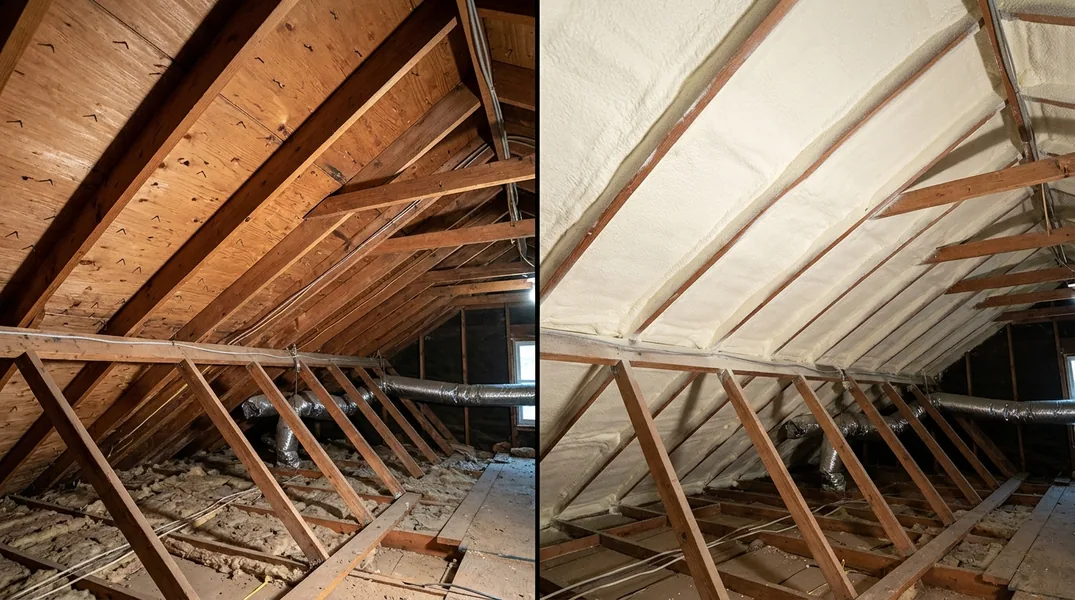
Understanding Spray Foam Types: Open Cell vs Closed Cell
When you're researching Attic Spray Foam Insulation for your home, you'll quickly encounter two main options: open cell and closed cell spray foam. While both are spray foam products that expand to fill gaps and cavities, they have fundamentally different structures and performance characteristics. Understanding these differences is crucial for making an informed decision about what's best for your Asheville home.
Open cell spray foam has a structure where the cells are not completely closed off from each other. This creates a softer, more flexible material that's less dense than its counterpart. Closed cell spray foam, on the other hand, features cells that are completely sealed, creating a much denser and more rigid foam. These structural differences lead to very different performance profiles, which is why choosing between them requires careful consideration of your specific needs and local climate conditions.
Open Cell Spray Foam: Benefits and Limitations for Asheville Homes
Open Cell Spray Foam Insulation is often the more affordable option and offers several advantages for homeowners. Because it's less dense, it requires less material to achieve coverage, which directly impacts your overall project cost. Open cell foam also has excellent sound dampening properties, making it ideal if you're concerned about noise transmission between floors or from outside. Additionally, open cell foam is more flexible, which means it can conform better to irregular surfaces and hard-to-reach areas in your attic.
However, open cell foam does have some important limitations. It's more permeable to air and moisture, which means it's not ideal for creating a completely sealed attic environment. In a region like Asheville where humidity can be a concern, this permeability could be problematic if moisture infiltration becomes an issue. Open cell foam also offers a lower R-value per inch compared to closed cell, typically ranging from R-3.5 to R-3.8 per inch, so you may need greater thickness to achieve your desired insulation level.
Closed Cell Spray Foam: Superior Performance for Sealed Attic Insulation
Closed Cell Spray Foam Insulation is the premium choice for homeowners seeking maximum performance and durability. With an R-value of approximately R-6 to R-7 per inch, closed cell foam provides superior insulation in a thinner application. This higher R-value means you can achieve better thermal resistance with less material, which is particularly valuable in attics where space might be limited. Closed cell foam also creates an excellent air and moisture barrier, making it ideal for creating a truly sealed attic insulation environment.
The dense structure of closed cell foam also provides structural reinforcement to your attic. This added rigidity can actually help strengthen roof decking and improve the overall structural integrity of your home. For homeowners concerned about moisture management or those living in areas with significant temperature swings, closed cell foam offers superior protection. The trade-off is cost: closed cell foam typically runs higher in price than open cell alternatives, though many homeowners find the long-term energy savings and performance benefits justify the initial investment.
Unvented Attic Spray Foam: Creating a Conditioned Space
One of the most compelling reasons to choose spray foam for your attic is the ability to create an unvented attic spray foam installation. Traditional attics rely on ventilation to manage moisture and temperature, but this approach has significant drawbacks. Vented attics allow conditioned air from your home to escape, forcing your HVAC system to work harder and driving up energy costs. Unvented attics, sealed with spray foam, eliminate this problem by making your attic part of your home's conditioned space.
When you seal your attic with spray foam, you're creating a thermal envelope that keeps the attic temperature closer to your living spaces. This means your roof stays warmer in winter, which can prevent ice dams, and cooler in summer, which reduces cooling costs. The sealed environment also provides better protection against outdoor air pollutants, pollen, and other contaminants. For homeowners in Weaverville and surrounding areas dealing with seasonal humidity challenges, an unvented attic can be particularly beneficial when installed with closed cell foam.
Climate Considerations: What Works Best in the Asheville Area
The Asheville region experiences a humid subtropical climate with significant seasonal variation. Winters can be cold enough to bring snow and ice, while summers are warm and humid. These conditions present specific challenges for attic insulation. The humidity levels in summer can be substantial, and temperature swings between seasons are considerable. This climate profile actually favors closed cell spray foam for most applications, as its superior moisture resistance and higher R-value per inch make it better suited to managing the region's weather patterns.
That said, open cell foam can still be an excellent choice if moisture management is carefully addressed through proper ventilation and dehumidification strategies. The key is working with experienced professionals who understand local climate challenges. Your decision should also factor in your home's specific location within the region. Homes at higher elevations may face different moisture and temperature challenges than those in lower areas. This is why getting a professional assessment from someone familiar with local conditions is so valuable.
Attic Spray Foam Insulation Cost in Asheville: What to Budget
Understanding the financial investment required for spray foam insulation is essential for homeowners planning their projects. The pricing for attic spray foam projects varies based on several factors, including the size of your attic, the type of foam selected, and the complexity of the installation. Open cell foam typically ranges from lower cost per square foot, while closed cell foam represents a higher initial investment. However, the superior R-value and durability of closed cell foam often means lower lifetime costs due to reduced energy consumption and fewer maintenance requirements.
Most homeowners should budget for closed cell foam in the range of $1.50 to $2.50 per board foot, though this can vary based on local market conditions and project specifics. Open cell foam generally costs less per board foot but requires greater thickness to achieve equivalent R-values. The best way to understand what your specific project will cost is to reach out for a free estimate from Asheville Spray Foam Insulation. When you contact us at (828) 519-0053, our team can assess your attic, discuss your goals, and provide detailed pricing for both open cell and closed cell options. This consultation is an excellent opportunity to ask questions about long-term savings and energy efficiency improvements you can expect.
Making Your Decision: Open Cell or Closed Cell for Your Home
Choosing between open cell and closed cell spray foam ultimately depends on your priorities, budget, and specific home conditions. If your primary concern is cost and you have good moisture management in place, open cell foam can be a solid choice. If you're looking for maximum performance, superior moisture resistance, and long-term energy savings, closed cell foam is typically the better investment. For most homeowners in the Asheville area, closed cell foam aligns better with local climate challenges and provides the most comprehensive benefits.
The decision also depends on whether you want to create a truly sealed, unvented attic or maintain a more traditional vented approach. If you're interested in maximizing energy efficiency and creating a conditioned attic space, closed cell foam combined with proper air sealing is your best option. Whatever you decide, professional installation is critical. Improper application can compromise performance and lead to moisture problems down the road. Contact Asheville Spray Foam Insulation today at (828) 519-0053 or request a free estimate to discuss which solution is right for your home. Our experienced team is ready to help you make an informed decision and deliver a professional installation that will serve your home for years to come.
Looking for a professional spray foam insulation contractor in Asheville? Asheville Spray Foam Insulation responds fast for all your spray foam insulation needs.
Get a Free Quote