Understanding Zone 4A: Asheville's Unique Climate Challenge
Asheville sits in IECC Climate Zone 4A, a region characterized by moderate winters and humid summers. Unlike colder northern zones or arid southwestern climates, Zone 4A presents a distinctive challenge: moisture moves in both directions. During winter, warm interior air carries moisture toward cold exterior walls and crawl spaces. In summer, humid outdoor air infiltrates into cooler interior spaces. This bidirectional moisture movement is what makes insulation strategy in Asheville fundamentally different from other regions.
Many homeowners assume that insulation is simply about blocking cold air. In reality, Zone 4A insulation must also serve as a vapor control layer. Traditional fiberglass batts and blown-in cellulose are hygroscopic, meaning they absorb and release moisture with seasonal changes. This constant cycling can lead to mold growth, wood rot, and reduced R-value performance over time. The solution lies in understanding how moisture behaves in your specific climate zone and selecting materials that address both thermal and moisture concerns simultaneously.
Why Crawl Space Insulation Matters More Than You Think
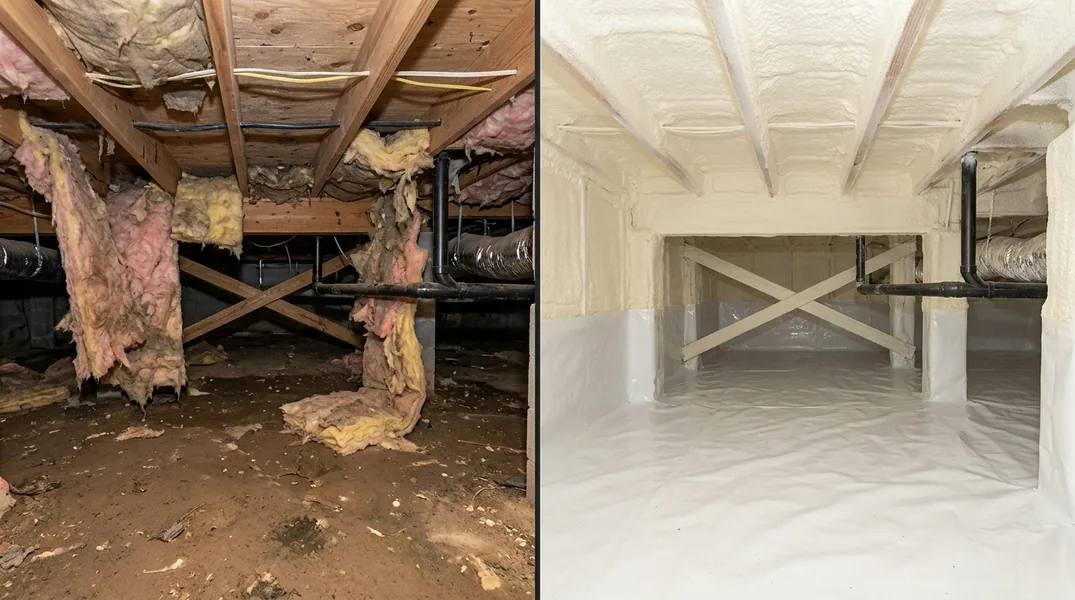
Crawl space spray foam is one of the most overlooked yet impactful upgrades a homeowner can make. Your crawl space is essentially the foundation of your home's thermal envelope. If it is not properly insulated and sealed, conditioned air escapes downward, and moisture-laden air enters upward. In Weaverville and surrounding areas, many older homes have crawl spaces that are vented to the outdoors, which is particularly problematic in a humid climate zone. These vented crawl spaces allow summer humidity to condense on cold water pipes and structural members, creating ideal conditions for mold and pest infiltration.
The best insulation for crawl space is one that combines thermal resistance with air sealing and vapor management. Closed Cell Spray Foam Insulation achieves all three in a single application. When sprayed onto rim joists, band boards, and foundation walls, closed cell foam creates a continuous air barrier that prevents both warm and cold air from escaping. More importantly, it has a vapor permeability rating of less than 1 perm, meaning it effectively blocks moisture infiltration from the crawl space into your living spaces above. This is critical in Zone 4A, where summer humidity is relentless.
Pier and Beam Insulation: A Zone 4A Necessity
Pier and beam foundations, common in older Biltmore Forest and Woodfin homes, create an exposed under-floor cavity that is particularly vulnerable to moisture and temperature fluctuations. Unlike concrete slab foundations, pier and beam homes have an open space beneath the first floor that connects directly to the outdoor environment. In winter, this void becomes a cold zone that pulls heat from the living spaces above. In summer, it becomes a moisture reservoir where humid air condenses on cooler surfaces. Without proper insulation, cold floors in winter and elevated humidity year-round are inevitable problems.
Traditional approaches to crawl space insulation in pier and beam homes often involve wrapping ductwork and pipes with fiberglass sleeves or installing batts between joists. These methods fail in Zone 4A because they do not address air infiltration or vapor control. Spray foam, particularly Closed Cell Spray Foam Insulation, solves both problems simultaneously. By spraying the underside of the first floor or the perimeter walls of the crawl space, you create a thermal and moisture barrier that keeps cold floors warm and prevents humid air from rising into your home. The result is greater comfort, lower energy bills, and protection against moisture-related damage.
Cold Floors Insulation: Why Your Feet Matter
One of the most common complaints from homeowners in Asheville is cold floors, particularly in winter months. Even when your heating system is running, an uninsulated or poorly insulated crawl space allows cold air to permeate the floor assembly from below. This creates a thermal bridge that no amount of ceiling insulation can overcome. The problem is compounded in Zone 4A because the seasonal temperature differential is significant enough to cause substantial heat loss, but not so extreme that homeowners expect to need specialized solutions. Many residents accept cold floors as inevitable, when in fact they are a sign of a fixable insulation deficiency.
Cold floors insulation begins with understanding where the problem originates. If your home sits on a pier and beam foundation or has a vented crawl space, the solution is to insulate the underside of the floor assembly or seal and insulate the crawl space itself. Closed Cell Spray Foam Insulation applied to the rim board and band joist creates an immediate thermal barrier. The foam adheres directly to wood and concrete, leaving no gaps where air can infiltrate. Within days of application, homeowners report noticeably warmer floors and more even temperature distribution throughout their homes. This improvement in comfort also translates to energy savings, since your heating system does not have to work as hard to maintain desired temperatures.
Closed Cell vs. Open Cell: Which is Right for Zone 4A?
Both Closed Cell Spray Foam Insulation and Open Cell Spray Foam Insulation have applications in home insulation, but Zone 4A's moisture dynamics make closed cell the preferred choice for crawl spaces and pier and beam foundations. Closed cell foam has a higher R-value per inch (approximately 6.0 to 7.0 R-value per inch) and a very low vapor permeability rating, making it an excellent vapor retarder. This means it actively prevents moisture from migrating through the insulation layer, which is essential in a climate where moisture moves bidirectionally. Open cell foam, by contrast, is vapor permeable and better suited for interior walls where moisture can dry toward the interior, or for attic applications where vapor can escape upward.
In crawl spaces and under floors, closed cell foam's superior moisture resistance justifies its higher cost. The investment protects your structural integrity and prevents costly mold remediation down the road. Additionally, closed cell foam provides structural rigidity, which means it can be applied to rim joists and band boards without additional bracing. Over time, the durability and performance benefits of closed cell foam in Zone 4A applications far outweigh the initial price difference. If you are uncertain which type of foam is appropriate for your specific situation, a professional assessment from Asheville Spray Foam Insulation can clarify the best approach for your home.
Getting Started with Professional Crawl Space Spray Foam Near Me
If you live in Asheville or the surrounding region and suspect that your crawl space or pier and beam foundation needs attention, the first step is a professional evaluation. Many homeowners delay addressing insulation issues because they underestimate the impact or overestimate the cost. The reality is that uninsulated or poorly insulated crawl spaces and under-floor cavities are energy drains that compound every month. A free estimate from a qualified spray foam contractor can reveal exactly where you are losing energy and what solutions make sense for your home and budget.
Asheville Spray Foam Insulation specializes in crawl space and pier and beam insulation projects throughout the region. Our team understands Zone 4A's unique moisture challenges and can recommend the most effective solutions for your home. Whether you need crawl space spray foam, Wall & Injection Foam Insulation, or comprehensive moisture management, we have the expertise to deliver results. Call us at (828) 519-0053 or visit our website to discuss your project. The sooner you address insulation deficiencies, the sooner you will enjoy warmer floors, lower energy bills, and greater peace of mind about your home's structural health.
Looking for a professional spray foam insulation contractor in Asheville? Asheville Spray Foam Insulation responds fast for all your spray foam insulation needs.
Get a Free Quote